

Roof Tarping in Spokane, WA
Spring snowmelt and seasonal rainfall in the Spokane area create conditions where roof damage from falling debris or ice accumulation can quickly lead to water intrusion into homes throughout neighborhoods like South Hill and Browne's Addition. Roof tarping provides immediate protection while you arrange permanent repairs, preventing water from entering your home during the critical window between damage and restoration. Ritter Water Damage Restoration connects you with local providers who can deploy tarping services to limit further damage and protect your property's interior.
Emergency Roof Tarping Services for Spokane Property Owners
Spokane's spring snowmelt and seasonal rainfall patterns create significant water intrusion risks, particularly when rapid thaw cycles combine with heavy precipitation. Many homes throughout the region—including those in established neighborhoods like South Hill and Browne's Addition—feature basements that are vulnerable to water seepage during these high-water periods. When a roof is damaged by wind, falling debris, or storm impact, water can pour directly into your home's interior, attic, and walls. Roof tarping is often the first critical step to stop active leaks and prevent cascading water damage that reaches basements, foundations, and living spaces below. Without immediate protection, water intrusion can spread quickly through framing, insulation, and structural elements, turning a roof problem into a far costlier restoration project.
Ritter Water Damage Restoration connects Spokane property owners with local independent restoration providers who specialize in rapid roof tarping deployment. When you contact the network, providers focus on securing your roof with heavy-duty tarping materials to halt water entry at its source, protecting the interior of your home while permanent repairs are planned or scheduled. The providers in this network understand that roof tarping is often an emergency measure—a bridge between the damage event and full restoration—and they work to minimize the window of exposure. After tarping is in place, they coordinate follow-up assessments and work with you to outline next steps for comprehensive drying and repair, ensuring no secondary damage compounds the original loss.
Why Spokane Homeowners Trust Ritter for Roof Tarping
Fast Local Roof Tarping Response
When weather damage threatens your roof, delays invite more water intrusion. Ritter connects you with local providers ready to deploy roof tarping quickly, minimizing exposure and secondary damage to your property.
Clear Communication Throughout Roof Tarping
You deserve to know what's happening to your roof and why. Local providers in Ritter's network explain roof tarping steps, timelines, and next phases in plain language, keeping you informed every step.
Thorough Roof Tarping and Documentation
Proper roof tarping requires precision placement and secure fastening to protect against further weather exposure. Ritter's local providers document their roof tarping work carefully, creating a clear record for your insurance claim.
Springtime Roof Protection for Basement Safety
Spokane's rapid snowmelt and seasonal rain create vulnerability for homes with basements, especially during thaw periods. Strategic roof tarping prevents water entry at the source, protecting your foundation and interior from costly intrusion.
How Our Roof Tarping Process Works
From your initial call to the final inspection, we provide a structured, professional, and efficient process to ensure your property is fully restored after Roof Tarping.
Schedule Your Roof Tarping Assessment
Contact Ritter Water Damage Restoration to connect with a local roof tarping provider in Spokane. A professional will assess your damaged roof, identify exposed areas, and determine the right tarping solution to prevent further water intrusion.
Deploy Emergency Roof Tarping
The local provider will install a protective tarp over the damaged section of your roof, securing it to prevent water from entering your home during spring snowmelt or seasonal rainfall. Roof tarping acts as temporary protection while permanent repairs are arranged.
Coordinate Follow-Up Repairs
Once the tarp is in place, the provider will discuss permanent roof repair options and work with your insurance company documentation. Regular roof tarping inspections ensure the covering remains secure until full restoration is complete.
Dealing with Roof Tarping in Spokane? Get fast, professional help.
Call Now — (509) 461-7766Roof Tarping Services Across Spokane
Spokane's spring snowmelt and seasonal rainfall patterns create particular urgency for rapid roof protection. When heavy snow accumulates over winter months, the transition to warmer weather can trigger fast thaw cycles that overwhelm drainage systems and expose roofs to prolonged water exposure. A damaged or missing roof section during this vulnerable season—whether from wind, falling branches, or structural failure—needs immediate tarping to prevent water from penetrating into attics, walls, and foundation areas below. The longer a roof breach remains exposed, the deeper water intrusion can travel into a home's interior and structural systems.
Properties throughout Spokane, from established neighborhoods like South Hill and West Central to newer residential areas, share this seasonal vulnerability. Older homes often have aging roofing materials and wood framing that absorb water quickly once a breach occurs, while all properties face the same risk of accelerated damage during Spokane's thaw periods. Roof tarping is a critical first step—a temporary weathertight seal that stops active water entry while permanent repairs are arranged. Ritter Water Damage Restoration connects Spokane property owners with local independent restoration providers who can deploy tarping services rapidly, minimizing the window of exposure and protecting what lies beneath.
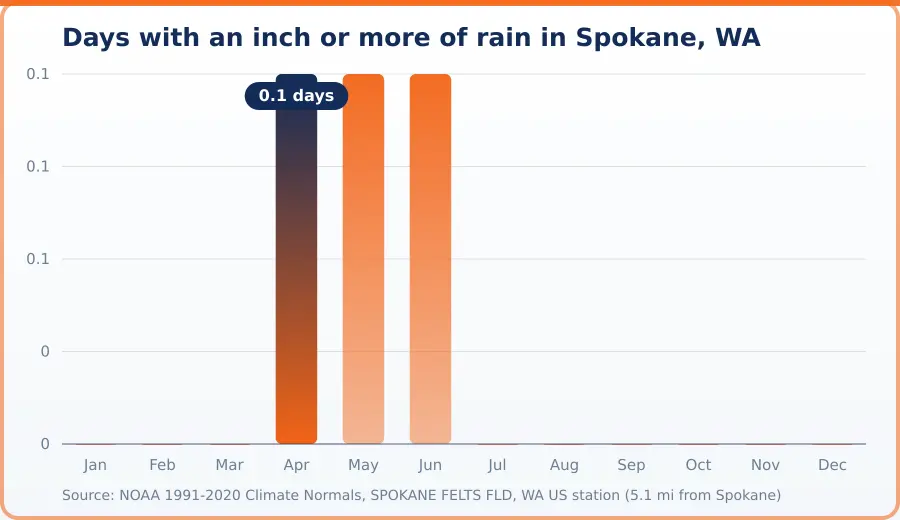
| Period | Days with an inch or more of rain (days) |
|---|---|
| Jan | 0 |
| Feb | 0 |
| Mar | 0 |
| Apr | 0.1 |
| May | 0.1 |
| Jun | 0.1 |
| Jul | 0 |
| Aug | 0 |
| Sep | 0 |
| Oct | 0 |
| Nov | 0 |
| Dec | 0 |
Source: NOAA 1991-2020 Climate Normals, SPOKANE FELTS FLD, WA US station (5.1 mi from Spokane). Retrieved October 4, 2026.
Roof Tarping Through Spokane's Seasons
Spring: Rapid Thaw Demands
Spring snowmelt combined with heavy rains creates urgent roof damage across Spokane, particularly in neighborhoods like South Hill where older homes are vulnerable. Roof tarping becomes critical to prevent interior water intrusion during rapid thaw periods. Ritter connects property owners with local providers who respond quickly to temporary protection needs.
Summer: Heat and Exposure
Summer heat in Spokane accelerates deterioration of temporary roof coverings and existing damage. Roof tarps installed after spring storms may need reinforcement or replacement as UV exposure weakens materials. Ritter helps homeowners arrange seasonal inspections and tarp upgrades before conditions worsen.
Fall: Storm Preparation
Fall brings seasonal storms and wind gusts that can tear roofing and create new damage requiring immediate tarping. Property owners should assess roof condition before winter weather arrives. Ritter connects customers with local providers who can deploy roof tarping services when fall storms strike unexpectedly.
Winter: Freeze-Thaw Cycles
Winter freeze-thaw cycles in the Spokane region cause existing roof damage to expand and leak water into attics and walls. Roof tarps must withstand cold temperatures and ice weight while protecting structural integrity. Ritter provides access to local restoration providers experienced in winter emergency tarping and water damage mitigation.
Roof Tarping FAQs — Spokane, WA
Roof tarping is a temporary protective covering applied over damaged roof sections to prevent water from entering your home until permanent repairs can be made. The independent local provider will assess the damage, secure heavy-duty tarps across the affected area, and anchor them firmly to withstand Spokane weather. This stops interior water intrusion and protects your belongings while you arrange long-term restoration.
Ritter Water Damage Restoration works to connect you with local providers in the Spokane area rapidly, especially for active water emergencies. When your roof is compromised, response time matters—water intrusion can cause significant damage quickly. Contact Ritter to be matched with an available independent provider who can prioritize your roof tarping needs and arrive to protect your property promptly.
Roof tarping costs depend on several factors: the size and location of the damaged area, roof pitch and accessibility, weather conditions, and the quality of materials used. Pricing also reflects local labor rates and how quickly the provider can mobilize to your Spokane location. Contact independent providers through Ritter to receive estimates tailored to your specific damage and property layout.
Before the independent provider arrives to apply roof tarping, clear the area beneath the damaged roof of loose items and valuables to prevent further water damage. Note which interior rooms are affected and move belongings away from water entry points if safe to do so. Document visible damage with photos for insurance purposes. The provider will handle securing the tarps and anchoring them—your main role is ensuring safe access to the roof and affected areas.
Yes, roof tarping is specifically designed to block water from entering your home through roof damage. By covering the compromised section with a sealed, anchored tarp, it redirects water away from your interior during the period before permanent repairs. This is especially valuable during Spokane's wet season, when continued exposure to rain and snowmelt can cause basement water intrusion and secondary damage throughout your property.
Roof tarping becomes critical in Spokane during spring snowmelt and seasonal rainfall periods, when water infiltration risk is highest. Rapid thaw combined with rain can overwhelm a compromised roof and lead to interior water damage, particularly in older homes. Winter weather and storm events can also damage roofs unexpectedly, making roof tarping urgent year-round. Having quick access to tarping services protects your home during these vulnerable seasons.
Related Services
Homeowner Safety Toolkit
Verify Your Spokane, WA Water Damage Restoration Company
Before you hire anyone, use these independent national resources to confirm credentials, standards, and track record.
NADCA
Sets the industry standard for inspecting and cleaning HVAC systems after water damage, so contaminated ductwork doesn't spread moisture through the rest of the house.
Duct & Air StandardsBBB
Look up any restoration company's complaint history, customer reviews, and accreditation status — a free, independent check before you hire.
Check StandingRIA
A national trade association whose member companies agree to a written code of ethics covering honest estimates, safety, and fair billing.
Code of EthicsDealing with Roof Tarping in Spokane, WA? Call (509) 461-7766 for 24/7 help.
Call Now — (509) 461-7766Areas We Serve Near Spokane, Washington

Coverage centres on Spokane, WA and reaches 8 surrounding communities. Response time is what matters most in the hours after a problem is found, so knowing the ground is part of the job.
Spokane, WA Information
Spokane sits at the heart of the Inland Northwest, a city of roughly 230,000 that balances big-region influence with an easy, unhurried pace. Its economy leans on a strong healthcare network, higher education anchors like Gonzaga University and Washington State University Spokane, and a growing base of manufacturing and logistics employers, with Fairchild Air Force Base and the surrounding agricultural economy adding further stability. An affordable cost of living and central location have kept the city steadily growing, drawing new residents and businesses alike.
Walk through neighborhoods like Kendall Yards or the Garland District and you'll feel Spokane's character up close: historic architecture, independent shops, and a community that takes pride in its place between the mountains and the plains.

Photo: Billy Hathorn, CC BY-SA 3.0